

Discipline in December
Should we keep it up or let it go?

Every year we tell ourselves the same story. “This year will be different. I’ll stick to my routine, and eat healthy, and keep working out. I’ll maintain all my good habits, even when the chaos hits.”
And every December, we wake up wondering what the heck happened. How did we fall off track so completely? Where did our discipline go and what’s wrong with us?
Luckily I feel confident that nothing is wrong with you. What most of us are actually struggling with is trying to white-knuckle our way through the most disruptive month of the year for the sake of “discipline.”
Is Discipline Overrated? (Particularly in December)
Certain pockets of our society these days have cultural obsession with discipline. Fitness fanatics, successful entrepreneurs, academics, and the likes speak about discipline as if it’s some kind of moral virtue that separates the strong from the weak. “If you just had enough willpower, enough determination, enough grit, you could power through anything.”
…Right?
Wrong. Discipline isn’t some infinite resource you can tap into whenever you need it. It is actually be a struggle maintaining the same level of discipline for every task we need to do.
For most of us, it’s more like a phone battery. Every decision you make, every temptation you resist, and every disruption you navigate all drains the battery. And December is running about fifteen apps in the background while watching YouTube with your brightness turned all the way up.
We often need to reframe discipline this time of year because you’re likely trying to run on 2% battery, but wondering why the video game you’re trying to play is lagging.
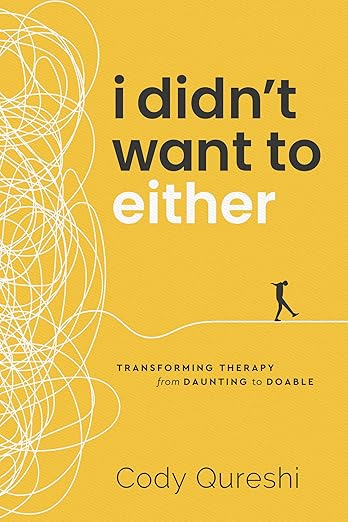
Want more mental health tips that don’t feel like homework? My book I Didn’t Want to Either: Transforming Therapy from Daunting to Doable is coming February 2026. It’s packed with the real talk, practical tools, and zero judgment you need to actually start (and stick with) therapy.
The eBook preorder link is now LIVE! Give yourself the gift of feeling better: http://bit.ly/4rxbDiX
What December Actually Demands
Think about everything that changes in December: your routine gets disrupted, your sleep schedule gets wrecked, your budget gets stressed, your social battery gets drained, etc.
On top of all that, there’s this underlying societal expectation that you should be cheerful and grateful and present for every moment. (Meanwhile, your nervous system and subconscious are screaming because all the change means nothing feels predictable or safe anymore.)
And we think the solution to this is just... trying harder and having more discipline? Sure, sure, that’ll work out great. Just like trying to solve a structural engineering problem with positive thinking.
The Maintenance Mindset
What we should actually do is to stop trying to thrive in December and start trying to maintain.
Seriously—your goal for December shouldn’t be hitting new personal records or changing the world. Now’s not the time to completely abandon the foundations that keep you functional. If you see on the weather report that a storm is coming in, you do house maintenance. Not renovating the kitchen right when it hits.
But what does maintenance look like? This would be keeping one or two non-negotiables (or core, staple habits) no matter what else falls apart. Maybe that’s seven hours of sleep and drinking water. Or it could be continuing therapy appointments and taking your medication, which are notorious for falling apart during holiday seasons. Or perhaps it’s one ten-minute walk a day and answering your best friend’s texts.
Notice that a perfect diet is not on the list, or a rigorous workout schedule. Let’s not even talk about a completely clean house. Let’s try for those things when life is stable, which is questionable for the month of December.
Systems Over Discipline
My theory for the reason that discipline fails in December is that discipline requires constant and active decision-making. By this time of the year, your decision-making capacity is already maxed out. Do you know how many decisions you make just getting ready for one holiday party or gathering? What to wear, what to bring, when to leave, how to navigate that one awkward relative, whether to drink, what to eat, when to go home. There’s an element of mental load with these things, and you’re practically exhausted before you even get there.
This is why systems beat discipline every single time. (Systems are the things you set up once that run automatically without requiring constant willpower.)
Examples would be automatic bill pay so you’re not deciding to pay bills under stress, or keeping your gym bag in your car so there’s one less decision between you and working out.
Right now it might look like having a standard “no” response for invitations so you don’t have to craft a new excuse every time, or meal delivery/simplified meal rotations so you’re not deciding what to eat when you’re already hungry and overwhelmed.
The less you have to actively decide in December, the more likely you are to maintain the things that actually matter to you (and the few remaining brain cells you have left).
Permission to Adjust: Granted
Maybe the routine that works in October doesn’t work in December, and that’s fine. Your five-morning-a-week workout routine might need to become twice a week for a month. Or if you’re like me, that’s more like once every two weeks these days. Your elaborate skincare routine might simplify to just washing your face and moisturizer.
This is adaptation, which is actually a much more valuable skill than rigid discipline.
The people who make it through December with their sanity intact aren’t the ones with the most willpower; they’re the ones who know how to adjust their expectations, go with the flow, and protect the absolute essentials while letting everything else be just good enough.
Your December Directive
Forget discipline and focus on sustainability. See if you can identify the two or three things that genuinely keep you functional, then protect those things as best you can.
You’ll have plenty of time in January to get back to your regular programming. Surviving December means your brain needs your flexibility, your self-compassion, and your ability to prioritize what actually matters over what looks good on paper.